
Quick answer
Give each coloring page one clear job in the school day, teach the material routine before expecting independence, and keep participation flexible. Three to five reusable designs are enough for the first week.
- Use pages for arrival, transitions, read-aloud responses, or reflection rather than as unplanned filler.
- Offer a small range of detail levels plus blank paper without assigning ability labels.
- Let students save unfinished work and choose whether to share or display it.
Start with a job the page can actually do
Choose each page for a specific moment: arrival, a classroom tour, a read-aloud response, quiet work after lunch, or the few minutes before dismissal. Avoid printing a large stack just because the pictures look seasonal. When the page has a clear place in the day, students can understand whether they are settling in, making a choice, adding an idea, or waiting for the group to move on.
Before students begin, model the whole routine in under a minute. Show where pages live, which materials are available, what to do with an unfinished page, and how to clean the space. Edutopia's classroom-routines guidance recommends explicitly teaching procedures and deciding in advance what students should do when they finish. Treat the coloring setup the same way you would treat a learning station: the procedure comes before independence.
Keep the invitation low-pressure. Students may color one section, add their own drawing, choose a different available page, or save the sheet for later. The page is not a test of neatness, speed, or willingness to talk about oneself. That distinction matters during a week when children are still learning whether the room makes space for different ways of participating.
1. Use an arrival page to teach the morning routine
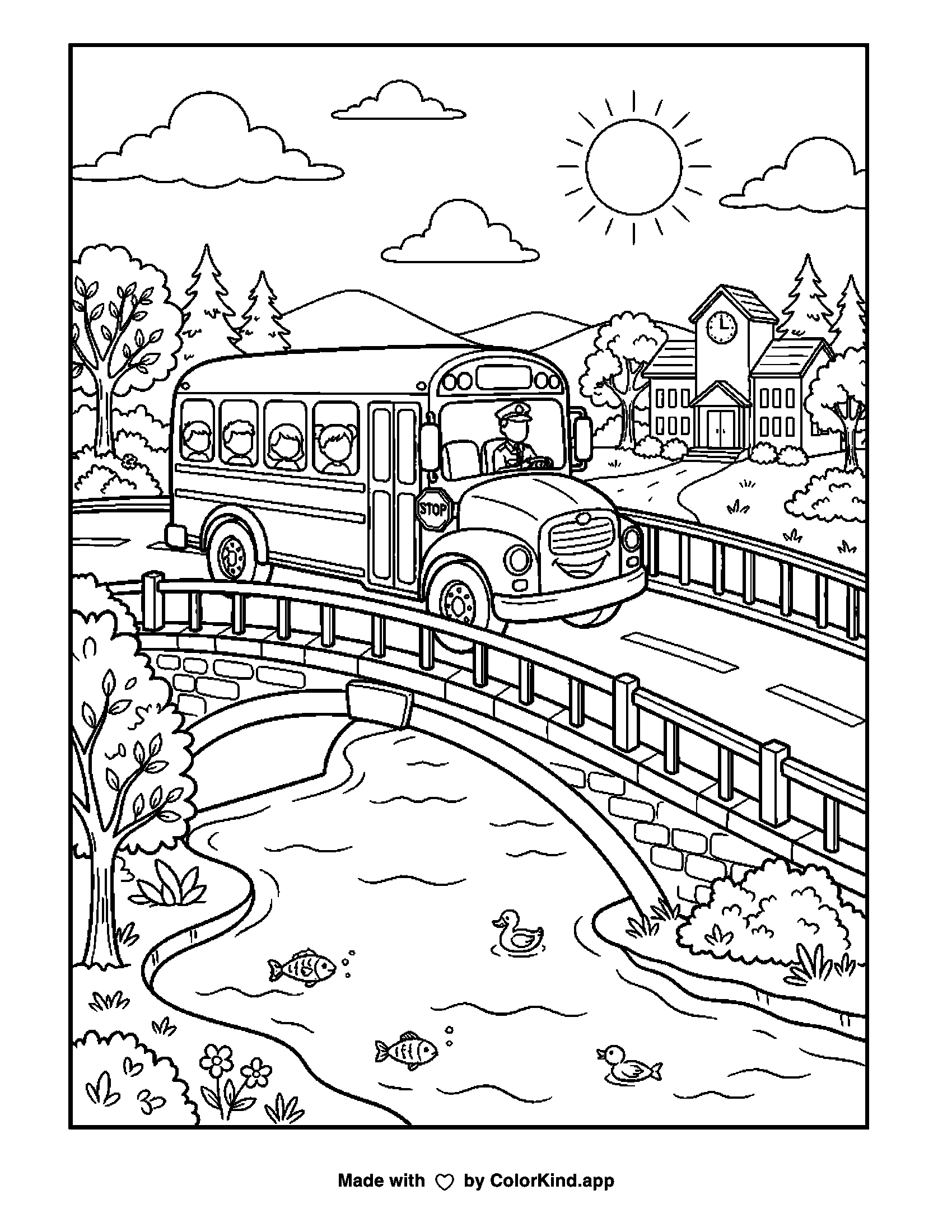
Place two or three page choices beside a small set of crayons or pencils. A school bus, classroom library, friendly animal, or simple school-supply scene works because students can understand it without a long explanation. Post a short visual sequence nearby: put belongings away, check the schedule, choose a page, begin anywhere. Greet students first, then point to the same sequence each morning.
Reading Rockets recommends visible schedules and independent “sponge” activities with choices at different skill levels. Put that advice into the setup: offer one page with broad spaces, one with moderate detail, and blank paper for a student who would rather draw. Do not assign difficulty by age in front of the group. Let students choose the amount of visual detail that feels manageable that morning.
2. Turn the classroom tour into a place-making activity
After visiting the library, office, cafeteria, playground, or pickup area, return to one shared school scene. Invite students to add a small detail they noticed: a plant near the library, the shape of a playground structure, a sign color, or a favorite part of the walking route. Children can also invent a helpful detail, such as a reading nook for a tiny animal. Observation and imagination are both welcome.
For younger groups, color one landmark together and narrate the connection: “This door reminds me where we entered after recess.” Older students can label the back with one place they want to remember. No one has to present the page. Reading Rockets notes that the opening days are useful for getting acquainted, settling into routines, and engaging children in talking, reading, and writing; the page can support any of those modes without requiring all three from every student.
3. Build community without a high-pressure icebreaker
Print several copies of one welcoming scene and let pairs or table groups make different versions. Ask a concrete collaboration question: Which three colors should appear somewhere on both pages? What could we add so a new character would know it is welcome? Where should the characters meet? These prompts give students something to decide together without asking for a surprising fact, a public performance, or personal information.
Another option is a class gallery made from individual choices. Students color or add to a page, then decide whether it may be displayed. Hang participating pages side by side without ranking them or choosing a winner. Edutopia's first-days community guidance favors low-prep activities that shift attention away from performance and toward participation, teamwork, and different perspectives. A gallery of varied responses makes that principle visible.
4. Extend a read-aloud with one open question
Choose a page connected to the setting or broad theme of a read-aloud rather than trying to reproduce copyrighted characters. After reading, ask one question with many possible answers: What could happen just outside this picture? What might this character carry on the first day? Which object would help someone solve a problem? Students can answer through color, an added object, a speech bubble, dictation, or a sentence on the back.
Keep the response attached to the conversation, not to recall accuracy. A child may borrow the book's idea, move in a new direction, or simply color while listening to classmates. If you want a custom scene, ColorKind is free to try on iPhone and iPad; a short original prompt such as “three animal friends organizing a classroom library” leaves more room for student decisions than a prompt that specifies every object and color.
5. Offer a private feelings check-in
Use a weather, backpack, or simple character page as an optional check-in. Invite students to choose colors or add a symbol for how the day feels so far. Explain that they can keep the meaning private, tell an adult later, or skip the prompt and color freely. Never infer an emotion from a color or ask a child to explain the page to the class.
This works best as one choice within a broader welcome routine, not as a diagnostic tool. An educator can circulate, notice who may need practical help, and offer a quiet conversation without interpreting the artwork. Comment on visible choices, such as “You added three kinds of weather,” instead of rating the result or correcting it. NAEYC's process-art guidance emphasizes child choice, open-ended exploration, and noticing what children make rather than fixing it to match an adult example.
6. Preview a lesson theme without adding another worksheet
A page can introduce the vocabulary and setting of an upcoming lesson. Before a plant unit, offer children gardening beside a school. Before a community-helper discussion, choose a crossing guard, librarian, bus driver, or cafeteria team. For literacy, add familiar letter shapes or invite students to label one object. For a simple STEAM connection, ask what could make the pictured bridge stronger or how the bus crosses the water safely.
Keep the academic invitation optional during the first encounter. Ask students what they notice and wonder before supplying a list of facts. Save a few pages and revisit them after the lesson so students can add a new detail or question. The goal is not to disguise a worksheet as art; it is to give the class a shared visual starting point that can grow with the topic.
7. Make calm transitions and early-finisher time predictable
Create one labeled folder for pages in progress and one tray for fresh choices. When a student finishes another task, the options might be: read, continue a saved page, or choose a new page. Practice getting and returning materials before using the routine during a busy transition. A consistent menu is easier to follow than a new activity announced every time the class has five spare minutes.
Do not make coloring available only to the fastest workers. Build it into arrival, centers, indoor recess, or another time that everyone can access. Let unfinished pages remain unfinished. For more setup ideas, the guide to early-finisher coloring activities explains how to rotate a small selection and give students a clear stopping point.
A simple Monday-to-Friday first-week plan
Reuse the same materials and procedures instead of introducing a completely new system each day. Each page below has one job, and none needs to take over the schedule.
- Monday, arrival: offer two page choices and explicitly model where supplies, finished work, and pages in progress belong.
- Tuesday, places: color a school scene after the classroom tour and add one real or imagined landmark.
- Wednesday, community: use a paired color decision or optional class gallery instead of a performative icebreaker.
- Thursday, literacy or lesson theme: extend a read-aloud, preview a unit, or add one question on the back.
- Friday, reflection and choice: revisit a saved page, add something learned during the week, or begin a different quiet choice.
Prepare once, then adjust from what you observe
Start with three to five designs, not a different page for every child and every day. Print one test copy before making a class set, check the margins, and choose ordinary printer paper for crayons or pencils. Keep a few detail levels available, place a spare sheet under marker work, and store materials where students can reach them without crossing the room. The iPhone and iPad printing guide covers the practical AirPrint and PDF steps.
Begin with two or three back-to-school or school-themed choices, or make one original scene that matches the week's lesson. Watch how students use the choices: which pages are easy to begin, where cleanup gets confusing, and whether anyone needs a blank-page option or a quieter seat. Keep adjusting until students can start, use, and put away the activity without extra help.
Sources and further reading
- Edutopia: Classroom Routines and Procedures for Productive Learning
- Edutopia: 5 Ways to Build Classroom Community in the First Days of School
- Reading Rockets: First Day of School Activities
- Reading Rockets: How to Make Your Classroom Inclusive Today
- NAEYC: How Process-Focused Art Experiences Support Preschoolers